
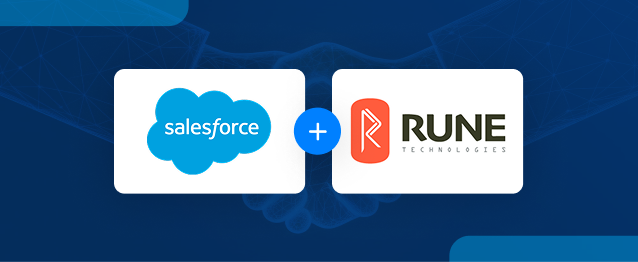
Salesforce has announced its acquisition of Rune Technologies, a defense technology firm specializing in military logistics, to enhance its Missionforce portfolio. This strategic move aims to integrate AI-powered capabilities for environments with unreliable connectivity, allowing military teams to make informed decisions on the frontline. The acquisition is significant as it aligns with Salesforce's growing defense business, which has seen an 80% year-over-year increase. With Rune's technology, Salesforce seeks to connect operational logistics with enterprise systems, further expanding its focus beyond traditional enterprise workflows.
Salesforce has been expanding its business through acquisitions, but its latest move brings a different area of technology into focus. The company has signed an agreement to acquire Rune Technologies, a defense technology company working on military logistics and frontline operations.
Announced on October 29, 2026, this Salesforce acquisition is expected to strengthen its government and defense portfolio, Missionforce. It also shows how Salesforce is looking beyond traditional enterprise workflows and exploring AI-powered capabilities for environments where reliable connectivity cannot always be expected.
In this blog, we will cover what Rune Technologies brings to Salesforce, why the deal matters for Missionforce, and how it fits into the company’s wider acquisition strategy.
Beyond Enterprise AI: Bringing Intelligence to the Field
Rune Technologies develops software that helps military teams manage supplies, plan transportation, forecast resource requirements, and make operational decisions. One important part of its technology is that it can work in DDIL environments, where connectivity may be denied, degraded, intermittent, or limited.
This is where the Salesforce acquisition becomes particularly interesting. Military teams often need to make decisions far away from the systems that hold information about equipment, personnel, and supplies. Rune connects enterprise information with real-time operational data, helping teams make decisions even when they cannot rely on a stable network.
Its platform also uses simulation and optimization models to support:
- Forecasting supply and resupply requirements.
- Planning transportation routes and resource allocation.
- Reviewing logistics plans before and during operations.
- Connecting frontline activities with enterprise systems.
How Rune Fits into Missionforce
Salesforce Missionforce already focuses on helping defense organisations manage complex operations. Rune adds another layer by bringing those capabilities closer to frontline teams.
In simple terms, Missionforce supports enterprise and strategic operations, while Rune extends that visibility to the operational edge. When connectivity returns, information can synchronize with the wider systems, helping maintain a more connected view of operations.
Kendall Collins, President and CEO of Missionforce and Government Cloud at Salesforce, explained the direction behind the deal:
“Rune Technologies extends that work into frontline logistics, bringing agent-powered capabilities to the tactical edge – keeping equipment, supplies, and personnel moving.”
For Salesforce, this is an important step towards connecting operational decisions with the systems used to manage resources and readiness across military organisations.
What Makes This Acquisition Significant?
Salesforce describes the Rune deal as its most significant national security-focused acquisition so far.
There are already some strong signs of growth in this area. Salesforce says its defense business has grown 80% year over year, one year after Missionforce launched. It also has customers across all six branches of the U.S. military and recently secured a 10-year U.S. Army contract with a $5.6 billion ceiling.
Rune is already deployed with the U.S. Army and U.S. Marine Corps. Its founders, David Tuttle and Peter Goldsborough, launched the company in 2024, bringing experience from military operations and defense technology.
David Tuttle, CEO and Co-Founder of Rune Technologies, shared what the agreement could mean for the company’s work:
“With Salesforce, we can take what we’ve built further, connecting operational logistics from the frontline to the enterprise.”
The transaction is expected to close in the fourth quarter of Salesforce’s fiscal year 2027, subject to customary closing conditions. Financial terms have not been disclosed.
Where Does This Fit in Salesforce’s Acquisition Strategy?
Looking at the latest Salesforce news and the companies acquired by Salesforce over recent months, a wider direction is becoming visible. The company has been adding capabilities across AI, data, customer engagement, and now defense logistics.
Some recent examples include:
- Braze: Salesforce signed an agreement to acquire the customer engagement platform in October 2026.
- Loops: The company announced another acquisition agreement in October 2026.
- Fin: Salesforce completed its acquisition of the AI agent platform in September 2026.
- Informatica: The acquisition was completed in November 2025, strengthening Salesforce’s data management capabilities.
The Rune deal adds a different dimension to this list. Rather than focusing only on customer-facing applications, it brings technology designed for real-world logistics and mission readiness.
For the Salesforce ecosystem, this direction is worth watching. A Salesforce partner working with government, defense, or complex enterprise operations may see new opportunities as Missionforce expands. However, the practical impact will depend on how Salesforce brings Rune’s capabilities into its wider platform after the deal closes.
Conclusion
This Salesforce acquisition is more than an addition to the company’s defense portfolio. It brings frontline logistics, situational intelligence, and technology designed for limited-connectivity environments into the wider Missionforce strategy.
As Salesforce continues to expand through acquisitions, Salesforce Rune shows how its focus is moving into areas beyond traditional CRM and enterprise automation. The next important step will be seeing how these capabilities come together after the transaction is completed.
Frequently Asked Questions
Salesforce is acquiring Rune Technologies to strengthen Missionforce with AI-powered frontline logistics, resource planning, and operational intelligence for military and defense organizations.
Rune will extend Missionforce capabilities to frontline operations by connecting military logistics, resource management, and real-time operational intelligence with enterprise systems.
Salesforce Missionforce is the company’s defense and government-focused portfolio. Rune complements it by bringing AI-powered logistics and decision-making capabilities closer to frontline military teams.
The transaction is expected to close in the fourth quarter of Salesforce’s fiscal year 2027, subject to customary closing conditions. Financial terms have not been disclosed.
The acquisition could create opportunities for a Salesforce partner working in government, defense, and enterprise operations as Missionforce expands its capabilities into frontline logistics and AI-powered decision-making.


 India
 USA
 UK
 Canada