
Customer service is evolving with AI that goes beyond simple chatbots, focusing on understanding customer issues and facilitating natural interactions. Salesforce's acquisition of Cresta enhances its customer service platform by integrating voice AI and real-time conversation intelligence. This partnership aims to improve issue resolution, support human representatives, and provide valuable customer insights. The future of customer service will prioritize context-aware interactions and seamless collaboration between AI and human agents, ultimately enhancing the customer experience. As Salesforce continues to expand its AI capabilities, businesses will need to adapt to these advancements in customer service.
Customer service is moving beyond chatbots that simply answer common questions. Businesses are now looking at AI that can understand a customer’s problem, respond naturally and take action without making every interaction feel like a scripted conversation.
Voice is an important part of this change. Customers often pick up the phone when an issue is complicated or needs immediate attention. This is where AI voice agents could make a real difference, especially when they have access to the right customer information.
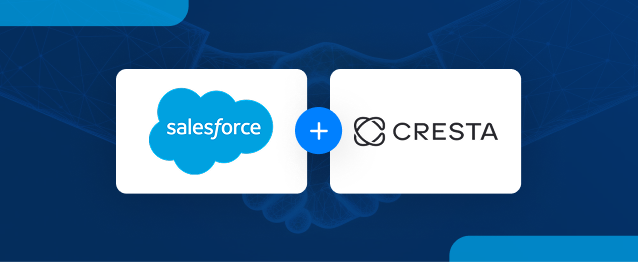
With its latest Salesforce acquisition announcement, the company is taking another step in this direction by signing a definitive agreement to acquire Cresta. The move brings voice AI and real-time conversation intelligence closer to its customer service platform. In this blog, we will look at what this could mean for businesses and how customer conversations may change in the coming years.
From Answering Calls to Understanding Customers
Cresta is known for its voice-first customer experience platform. Its AI agents can manage complex customer calls from beginning to end, while its technology also supports human representatives during live conversations.
The interesting part is not simply that AI can answer a phone call. It is how the technology can understand what is happening during that conversation and connect it with the customer’s history.
Salesforce brings customer records and the systems businesses already use to manage service. Cresta adds conversation intelligence and voice agents that can respond to customers in real time. Together with Service Cloud, the aim is to connect conversations with meaningful outcomes, such as:
- Faster issue resolution: AI agents can handle customer requests and help move conversations towards a solution.
- Better support for service teams: Human representatives can receive real-time guidance while speaking with customers.
- More useful customer insights: Businesses can review interactions to identify recurring concerns and areas that need attention.
- Improved service quality: Teams can analyze and test voice agents to make their responses more useful over time.
This could make the Salesforce acquisition particularly relevant for companies that manage a high volume of customer calls.
The Next Step: AI and Human Teams Working Together
One important part of this announcement is that the focus is not only on replacing manual work with AI. Cresta also provides real-time guidance to human representatives, analyzes conversations and helps businesses improve the performance of their voice agents.
As Kishan Chetan, EVP and GM of Agentforce and Service Cloud at Salesforce, said:
“Voice is where service is hardest to get right, and where it matters most to customers.”
This reflects a practical challenge for service teams. Customers usually expect more than a quick response when they call. They want someone, or something, that understands the issue and helps them move forward without asking them to repeat the same information.
Cresta already works with well-known businesses such as Marriott, Comcast, and Alaska Airlines. Its presence across these customer environments shows the kind of large-scale service operations where voice AI can be useful.
What Could a Customer Call Look Like in 2027?
Imagine a customer calling about a delayed order. Instead of navigating several menus or explaining the issue repeatedly, they could speak with an AI agent that understands the request and checks the relevant customer information.
The agent could then help with the next step. If the situation requires human attention, the representative could receive the conversation context and continue from there.
This is one possible direction for the Salesforce acquisition. As these capabilities become more connected, businesses could start using AI across more parts of the service journey.
Some other possibilities include:
- Context-aware conversations: AI agents could use available customer information to make responses more relevant.
- Real-time assistance: Human representatives could receive suggestions while handling complex customer requests.
- Conversation-based improvements: Service teams could use interaction insights to identify common problems and improve their processes.
- More connected service journeys: Customer conversations could be linked with actions such as issue resolution, retention and follow-ups.
Of course, the actual experience will depend on how these capabilities are integrated and used by businesses. Human oversight and service quality will remain important.
Another Sign of Where Enterprise AI Is Heading
The Cresta announcement comes during a busy period for Salesforce. Recent Salesforce news has included several agreements and completed deals involving businesses working across AI, customer service and enterprise technology.
Among the companies acquired by Salesforce or covered through recent acquisition announcements are Fin, Braze and Rune Technologies, alongside other businesses in its expanding portfolio.
Each brings a different capability into the picture. Cresta adds voice-based customer interactions, while Fin focuses on AI-powered customer service. These developments point towards a wider shift in how businesses may connect AI with their existing customer operations.
For a Salesforce partner, these changes also create opportunities to connect customer data, service processes, and AI capabilities. However, the real value will depend on how smoothly these technologies work together in everyday business environments.
There are still a few details worth watching:
- Cresta will continue supporting the leading contact center and telephony platforms its existing customers use after the transaction closes.
- The Salesforce acquisition is expected to close in the first quarter of fiscal year 2028.
- The deal remains subject to customary closing conditions and required regulatory approvals.
- Salesforce has not disclosed the financial terms.
The Future of Customer Service Is Taking Shape
The future of customer service will not simply be about adding AI to every conversation. It will be about making interactions easier, keeping customer context available and knowing when a human representative should step in.
The Salesforce acquisition of Cresta brings these ideas closer together. As Salesforce Cresta capabilities move towards a shared customer service experience, businesses will be watching how voice agents, human teams and customer data work together in practice.
For now, this is an important development in the wider Salesforce news around AI and customer experience. The next few years will show how much of this vision becomes part of everyday customer service.
Frequently Asked Questions
Salesforce is acquiring Cresta to strengthen Agentforce and Service Cloud with voice AI, real-time conversation intelligence, and smarter customer service automation.
Cresta brings AI-powered voice agents, real-time agent assistance, conversation analytics, and tools that help businesses improve customer interactions and service performance.
The acquisition could help businesses resolve customer issues faster through intelligent voice agents, contextual conversations, real-time guidance, and better integration with customer data.
The Salesforce Cresta acquisition is expected to close in the first quarter of fiscal year 2028, subject to customary closing conditions and regulatory approvals.
Cresta’s voice AI capabilities are expected to complement Service Cloud by connecting customer conversations with relevant information, automated assistance, and service workflows.

 India
 USA
 UK
 Canada