
Salesforce has introduced Koa Decisions, an AI decision model designed to make quick choices for customer requests, significantly reducing response times. Unlike general-purpose models, Koa Decisions focuses on identifying the correct category for a request in milliseconds, enhancing efficiency in routing customer inquiries. It supports various input types, allows for the addition of new categories without retraining, and integrates seamlessly into Salesforce Agentforce. This innovation aims to streamline workflows and improve customer experiences by ensuring faster and more consistent handling of requests.
When customers contact a business, they expect their requests to reach the right team without unnecessary delays. Whether they need help with an order, an account issue, or a service enquiry, every interaction involves a decision about what should happen next.
Salesforce has already introduced Koa, its CRM reasoning model developed with NVIDIA to help Agentforce handle complex, multi-step business tasks. Now, Salesforce is expanding the Koa family with Koa Decisions, a new model announced on November 6, 2026, that focuses on making quick, everyday decisions.
Rather than generating detailed responses or working through complex tasks, this new model is designed to make a specific choice in milliseconds. In this blog, we will look at what Koa Decisions does, how it works with Salesforce Agentforce, and what its introduction could mean for businesses and their customers.
What Is Koa Decisions and How Does It Work?
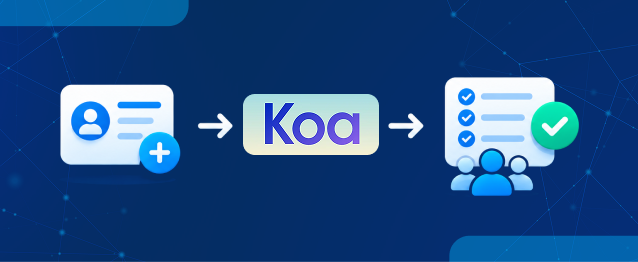
Koa Decisions is Salesforce’s next version of its HyperClassifier decision model. It reads a request, compares it with a list of categories defined by the business, and selects the most suitable option in milliseconds.
Unlike a general-purpose AI model that generates detailed responses, an AI decision model focuses on making a specific choice. It can return a category, a yes-or-no answer, or a score that another system can use to take the next step.
How Does Koa Decisions Make Decisions?
Think about a customer who contacts a company because they cannot access their account. The request could belong to the accounts, sales, or engineering team. Someone needs to identify the right destination before the issue can be handled.
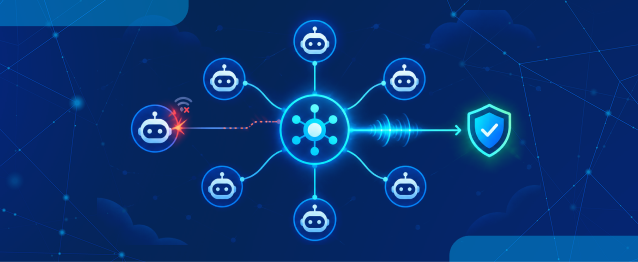
Salesforce Koa Decisions can read the message and select the relevant category in a single step. The process works like this:
- Read the request: It takes the customer’s message or other supported input.
- Compare available options: It checks the request against the categories or choices defined by the business.
- Return a decision: It selects the most suitable option and provides a confidence score.
- Move the process forward: The connected software can use that result to route the request or trigger the next action.
As Salesforce explains, the decision model returns a choice rather than generating a long response. This makes it useful for tasks where software needs a clear answer to continue working.
Why Does This Matter for Customer Requests?
A general-purpose language model can understand a customer message, but it may take longer to produce an answer when the task only requires selecting one option. A dedicated decision model is designed for that specific job.
Salesforce measured routing requests in Agentforce and found that its decision model took approximately 26 milliseconds, compared with around 1.4 seconds for a general-purpose LLM. That is roughly 98% lower response time in this particular comparison.
For customers, faster routing can mean less waiting before a request reaches the right team. It also helps businesses keep routine processes moving without using a larger model for every small decision.
What Makes Koa Decisions Different?
The new model builds on HyperClassifier and expands how decision models can be used across Salesforce. A few capabilities make this particularly relevant for businesses handling different types of customer requests.
1. Decisions in milliseconds
Koa Decisions handles single-step decisions in milliseconds. Instead of generating a detailed explanation, it identifies the required option and returns a result that other software can act on.
This is useful when a business receives a high volume of requests and needs to route them without adding unnecessary processing time.
2. Support for text, images, and audio
Customer requests do not always arrive as written messages. Someone might share an image of a damaged pfroduct or send an audio message explaining an issue.
Salesforce Koa Decisions adds multimodal support for images and audio, extending the types of inputs the model can handle. This gives businesses more flexibility when working with different customer interactions.
3. New categories without retraining
Businesses often introduce new services, departments, or request types. Traditionally, building a predictive machine learning model for a new category could involve collecting and labelling data, training the model, and checking its performance.
With Koa Decisions, teams can add a new choice to the available categories without going through that entire process. In Salesforce’s demonstration, the model selected a newly added Returns option with “no retraining.”
The demonstration also showed confidence scores of 95% and 99.5% for two example decisions. These are scores from the demo, not a general accuracy guarantee.
4. More ways to use decision models across Salesforce
Salesforce plans to extend the model beyond request routing. The announced areas include:
- Flows: Support for decisions within automated business processes.
- Apex: More options for developers building custom Salesforce applications.
- Prompt templates: Decision-making capabilities that can be used within prompt-based workflows.
- Developer API: An API that can allow developers to use the model in their applications.
These are planned extensions, so their availability should be checked as Salesforce releases further updates.
How Koa Decisions Fits into Salesforce Agentforce
An AI agent does more than respond to questions. It also needs to decide which action to take, which team should handle a request, or what information should be shared next.
This is where an AI decision model can support Salesforce Agentforce. It can handle the smaller choices that keep an agent’s workflow moving, while a larger language model can focus on tasks that need reasoning, explanations, or content generation.
For example, when a sales deal starts showing signs of risk:
- The decision model can identify the risk and select the team that should step in.
- The relevant team can receive an alert through Slack.
- A general-purpose AI model can summarise what changed and provide additional context.
This approach gives each model a more focused role. As Salesforce puts it, the goal is “Less Reasoning. More Doing.” Routine decisions can happen quickly, while more complex work gets the attention it needs.
What This Means for Businesses and Their Customers
The value of Koa Decisions is not just about how quickly a model returns an answer. It is about what happens after that decision and how smoothly the customer journey continues.
For businesses, this can support:
- Quicker request handling: Customer messages can reach the appropriate team without unnecessary delays.
- More consistent decisions: Requests can be evaluated against categories and options defined by the business.
- Simpler workflow management: Teams can use decision results to move requests through the next steps.
- Less model-building effort: New categories can be added without following the traditional predictive model training process.
- More efficient AI usage: Larger language models can focus on tasks that genuinely need detailed reasoning or content generation.
For customers, these improvements can mean fewer unnecessary handoffs, quicker responses, and a smoother experience when interacting with a business.
Conclusion
As businesses handle more customer requests through AI-powered systems, getting each request to the right place becomes just as important as generating a response. Koa Decisions brings a faster way to handle these everyday choices.
For customers, the benefit comes down to a smoother experience. Requests can be directed more quickly, workflows can continue with fewer delays, and teams can spend more time resolving issues instead of managing routine decisions.
Frequently Asked Questions
Salesforce Koa Decisions is an AI decision model that classifies requests, selects predefined categories, and returns decisions in milliseconds to support faster business workflows.
Koa Decisions evaluates incoming requests, selects the most relevant option, and returns a result that Agentforce can use to route requests or trigger the next action.
Koa Decisions supports text, images, and audio inputs, allowing businesses to classify different types of customer requests and interactions.
Yes. Businesses can introduce new decision categories without following the traditional model retraining process, making it easier to adapt to changing business requirements.
Salesforce Koa focuses on reasoning through complex, multi-step tasks, while Koa Decisions handles quick, predefined choices such as classification, routing, and scoring.
 India
 USA
 UK
 Canada