

All e-commerce brands struggle with cart abandonment issues – online shoppers filling a cart and then abandoning it halfway. Perhaps they’re simply window shopping. Or the final cart value discourages the purchase decision. This is especially true if a prospective customer does not have an account on the platform. The retailer is unable to market his products to such customers. With absolutely no way of tracing them, marketing strategies such as targeted promotions are of no use.
The crux of the problem then is to somehow connect marketing efforts to the commerce aspect of the retail operation. Studies have shown that more than 75% of shopping carts are initially abandoned. However, when such customers are tempted with a discount or promotion email, nearly half of them come back.
Why bridge the gap between marketing and commerce?
Integrating marketing and commerce in a single online shopping experience is easier said than done. There are logistical challenges: batch data transfers are difficult, duplicates are not readily identified, the heavy coding makes each system both complicated and fragile and many more. The ham-fisted approach to personalization can backfire here and customers can end up having negative experiences. They may receive communications when they have specifically opted out. Or, they may receive a promotion about products they already own.
To convert a sale in the cutthroat world of digital commerce, the customer needs to be at the centre of all strategies and operations. This is because it is crucial to enhance the customer’s experience: to continually set the bar higher every time. An important aspect of this goal is to not only understand customers but also to meet them with marketing offers on their terms. This is where the alignment of marketing techniques with consolidated customer profiles and patterns of online commerce can provide a breakthrough.
Salesforce to the rescue:
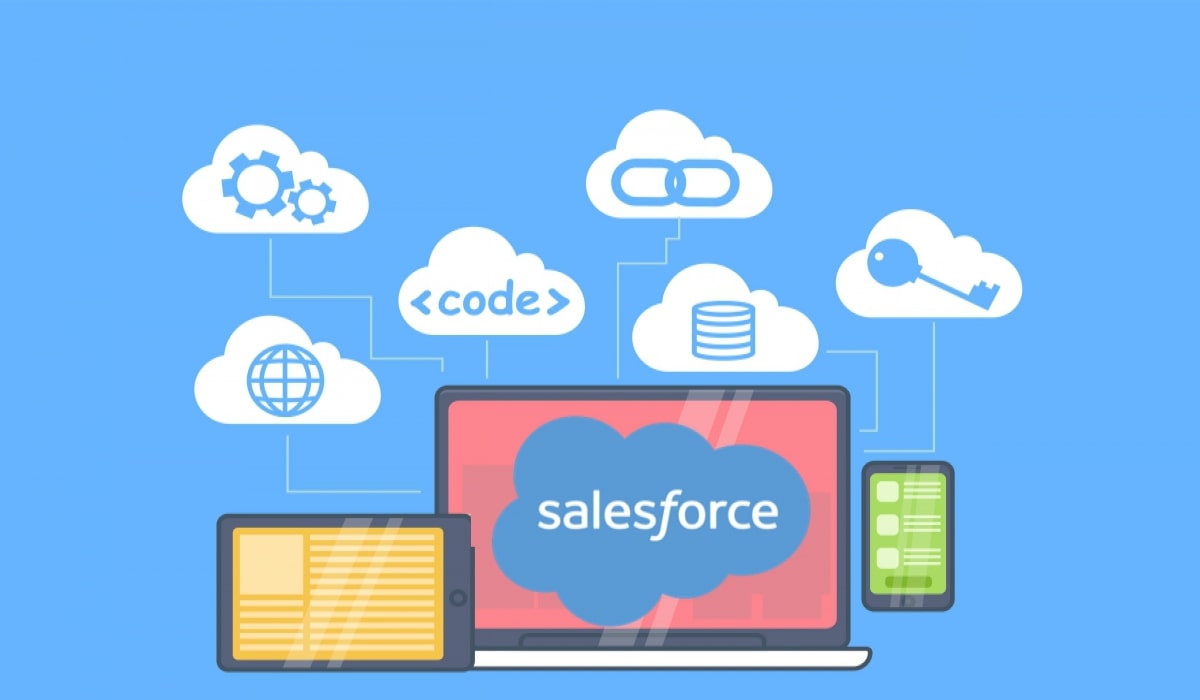
Salesforce presented an innovation that seeks to remedy this state of affairs. Known as the “Commerce Cloud and Marketing Cloud Connector”, it is built to sync data generated from different systems. This allows for intelligent personalization of every shopping transaction. Commerce Cloud data is forwarded to Salesforce Marketing Cloud. It is useful to ensure that every communication sent out has absolute, real-time relevance for the shopper. In addition, it also enables the construction of a customer profile with deeper personalization. Promotional campaigns have a higher probability of success when they are triggered by an abandoned cart and contain exactly the information the shopper is likely to be looking for. Marketers are also able to automate transactional communications such as password resets, order confirmations, feedback forms, and delivery tracking etc.
The following are the three core areas which the Salesforce Commerce Cloud and Salesforce Marketing Cloud Connector focus on.
Getting to know your typical customer:
Prospects convert to sales at a higher percentage when the experience is significantly personalized. In brick and mortar shops, the store assistant would walk the customer through the various choices at hand, their benefits etc. On the digital retail medium, Salesforce through Salesforce API integration applies artificial intelligence to achieve the same goal. Here, the customer’s shopping history, previous categories of items added to the shopping cart but never converted, the products explored, site recommendations are all taken up to provide the foundation for building an accurate customer profile. This allows for personalization by letting customers know about products they might be interested in and which promotional offers are available on these. Also, the customer’s preferred medium of communication becomes clear during such interactions.
Consistent communications:
Salesforce Marketing cloud unifies back end systems that are leagues ahead when it comes to offering a consistent marketing front to the customer. Consistency of branding, templates are reflected in every promotion or transaction, basically in every interaction with the customer. The same feel and look across marketing and commerce efforts is important to hook online shoppers.
Incredible tracking and analysis
For effective customer engagement, on-site traffic must be consistently monitored and analyzed. Every customer click can enhance the accuracy and effectiveness of a marketer’s decision making. But here’s a snag: how is it possible to predict which traffic and clicks were a result of marketing campaigns? This is critical information for marketers. Campaign tracking that unifies the marketing and commerce aspects provides all information through a single dashboard. This aligns the marketing and commerce teams so that they are able to have a sustained focus on the customer, and that all strategies implemented remain relevant and satisfying to the customer.
Conclusion:
Salesforce is on a crusade to win in the personalization of the online customer experience. Connecting marketing and commerce is a crucial aspect of this. The holistic view of shoppers this offers is be applied to increase revenue, strategize effective customer interactions in real time and create brand loyalty.
No Data Found.

 India
 USA
 UK
 Canada