



Claude AI simplifies interaction with Salesforce CRM data by allowing users to ask questions in plain English instead of manually searching for information. The integration utilizes the Model Context Protocol (MCP) to facilitate access to CRM data through a conversational interface, making tasks like finding opportunities or reviewing records much easier for sales and operations teams. This guide details the steps to set up a Salesforce MCP integration, covering server activation, app configuration, OAuth credentials, and permissions, enabling teams to leverage Claude's capabilities effectively.
Claude AI can make working with Salesforce CRM data much easier. Instead of manually opening records, building reports, or writing SOQL queries, teams can ask Claude questions in plain English and get answers from their Salesforce org. With Salesforce MCP, users can explore CRM information through a conversational interface, helping them find relevant details with less manual effort.
For sales and operations teams, this setup can make everyday CRM tasks more convenient. For example, users can ask Claude to find open opportunities, review recently modified records, or retrieve information based on specific criteria. A properly configured Salesforce Claude integration can reduce the need to switch between tools and help teams access relevant data through familiar chat-based interactions.
This guide will cover the complete steps to set up a Salesforce MCP integration using Salesforce’s Hosted MCP Server and Claude’s custom connector. It covers server activation, External Client App configuration, OAuth credentials, authentication, and tool permissions, so you can connect both platforms and test the integration step by step.
What is MCP?
MCP stands for Model Context Protocol. It is a standard that lets an AI assistant like Claude connect to other systems, in this case your Salesforce org, and use the tools they expose. With it, Claude can read records, run queries, and even trigger business processes from a chat window.
Salesforce also offers Hosted MCP Servers, which means Salesforce runs and maintains the server for you. You only activate one and connect Claude to it.
Prerequisites
- A Salesforce Org: Developer, Sandbox, or Production instance with full configuration privileges.
- Claude Account with Connector Access: Enterprise or organization workspace with connector capabilities enabled.
- Salesforce Administrator Access: High-level system permissions to configure External Client Apps and OAuth settings.
Steps to Connect Salesforce with Claude AI
Step 1: Activate the Salesforce Hosted MCP Server
- Log in to Salesforce and click the ⚙️ gear icon → Setup.
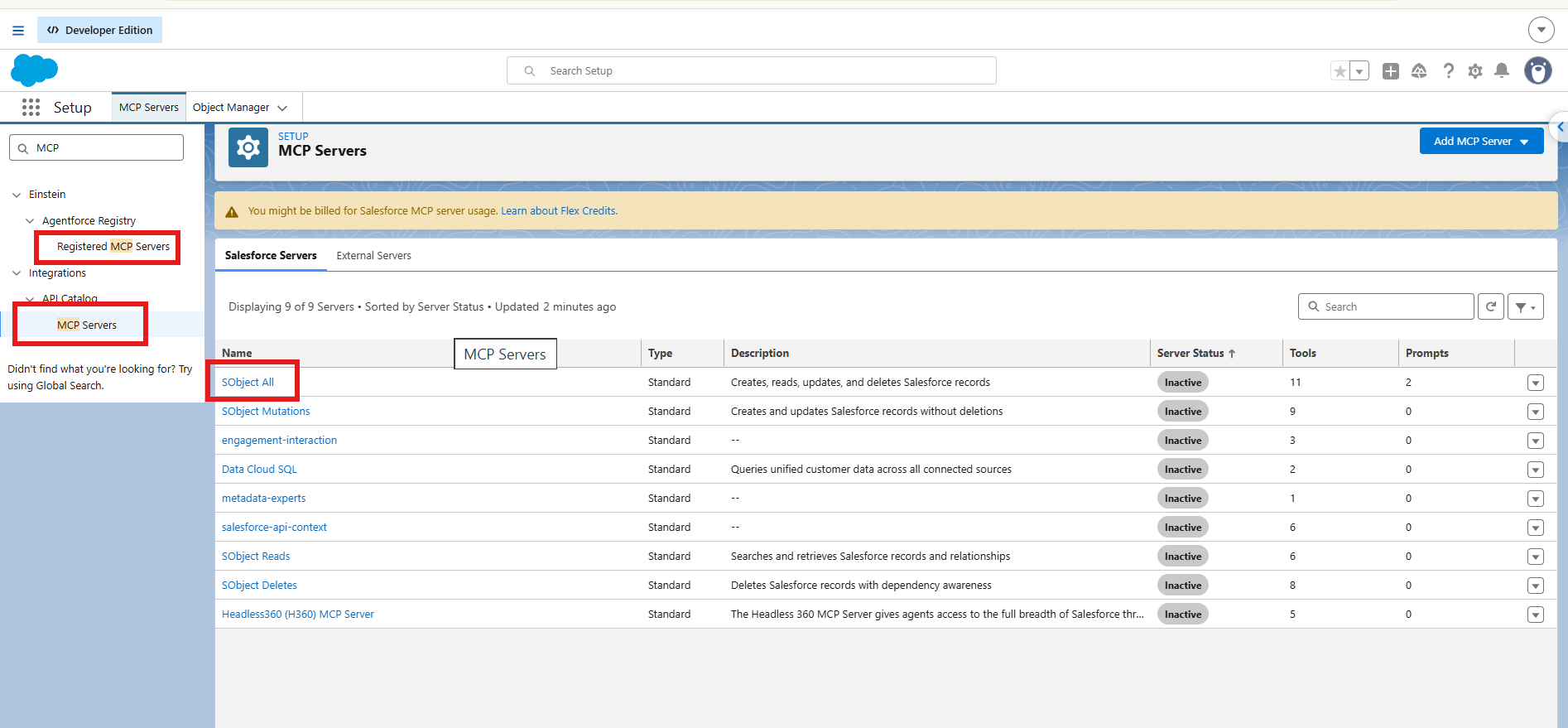
- In the Quick Find box, search for MCP Servers and select the Salesforce Servers tab.
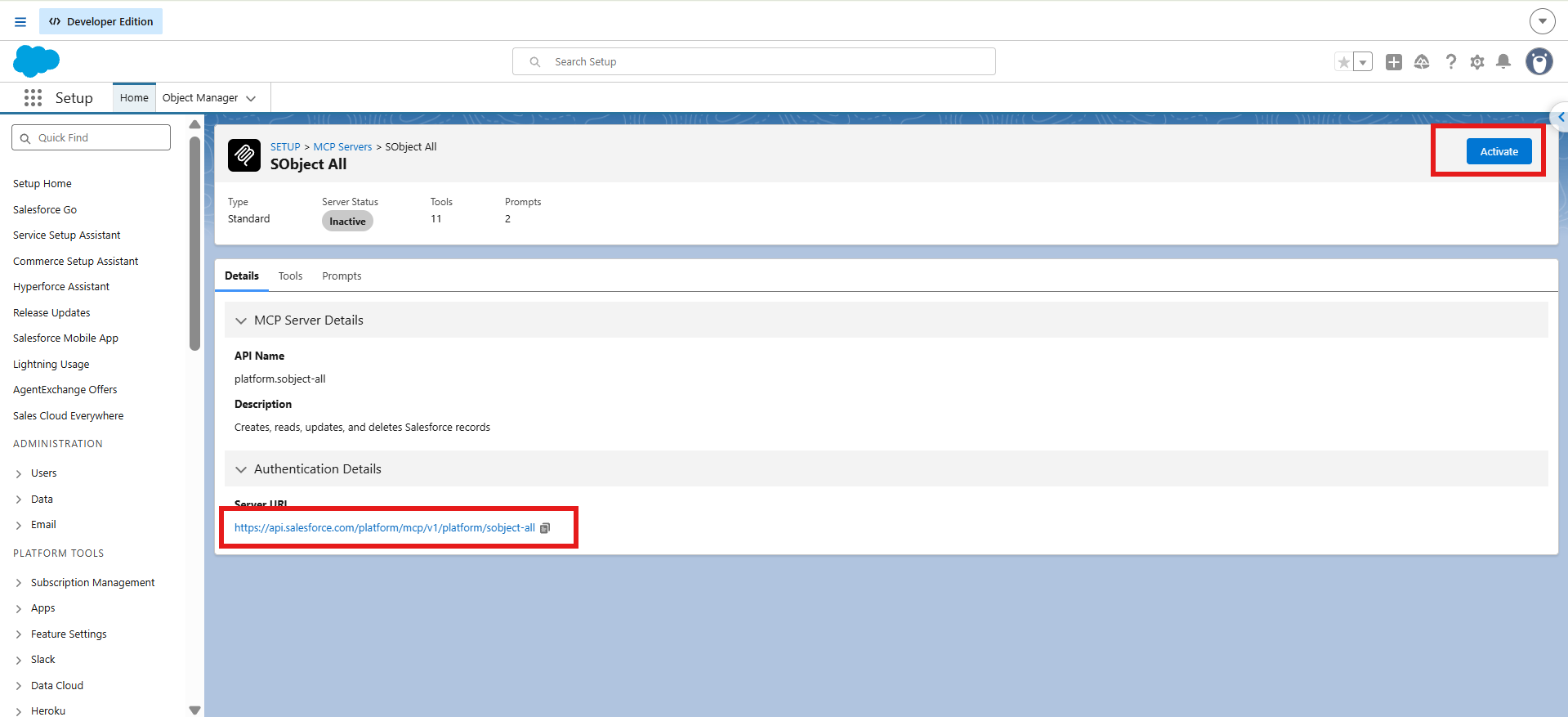
- Locate the server named SObject All Data (which grants access to core data like Accounts and Opportunities) and click Activate.
- Copy the Server URL. You will need this URL later
Step 2: Create an External Client App (ECA)
Claude authenticates with Salesforce using OAuth 2.0. Salesforce needs an External Client App that tells it which outside application is allowed to connect and what it may do.
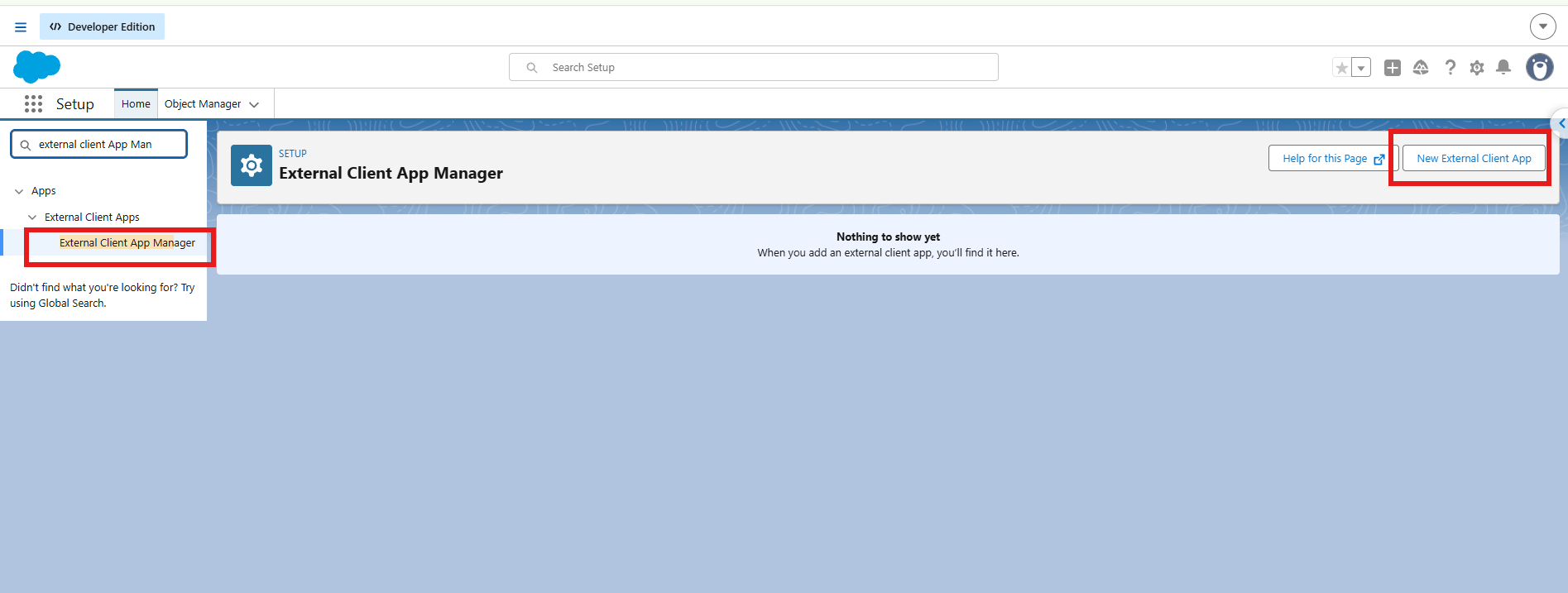
- In Setup, search for External Client App Manager.
- Click New External Client App.
- Fill in the basics: give it a clear name like Claude MCP Connector, add email as the contact, and pick a distribution state per your org’s policy.
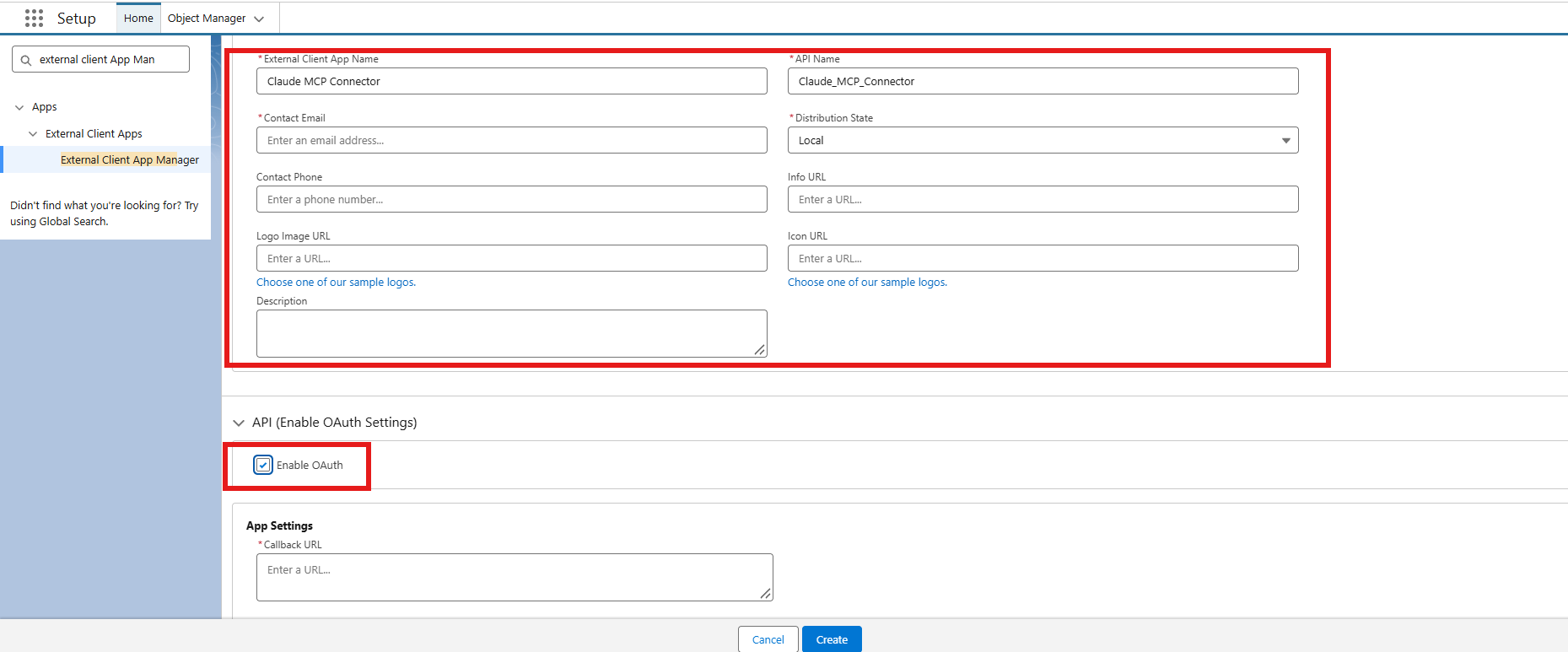
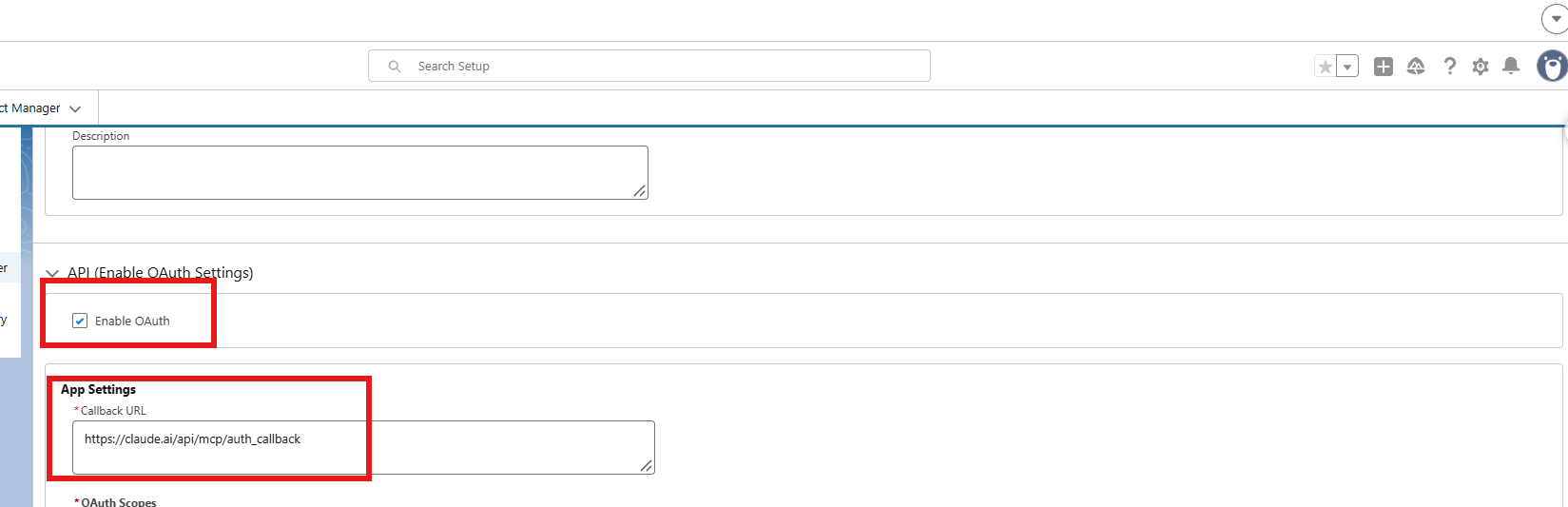
- Under OAuth Settings, enable OAuth and add this Callback URL: https://claude.ai/api/mcp/auth_callback
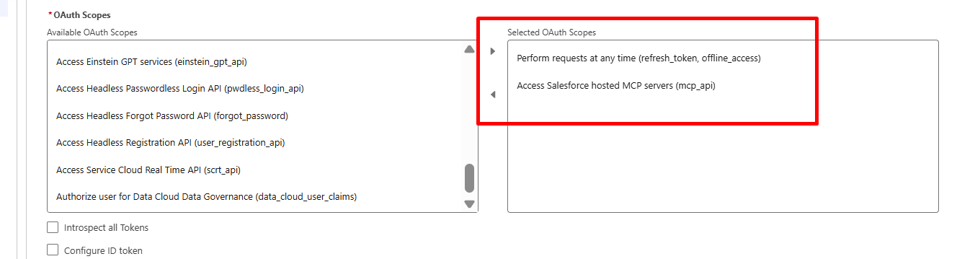
Add the following OAuth Scopes:
- Access Salesforce-hosted MCP servers (
mcp_api) - Perform requests at any time (
refresh_token,offline_access)
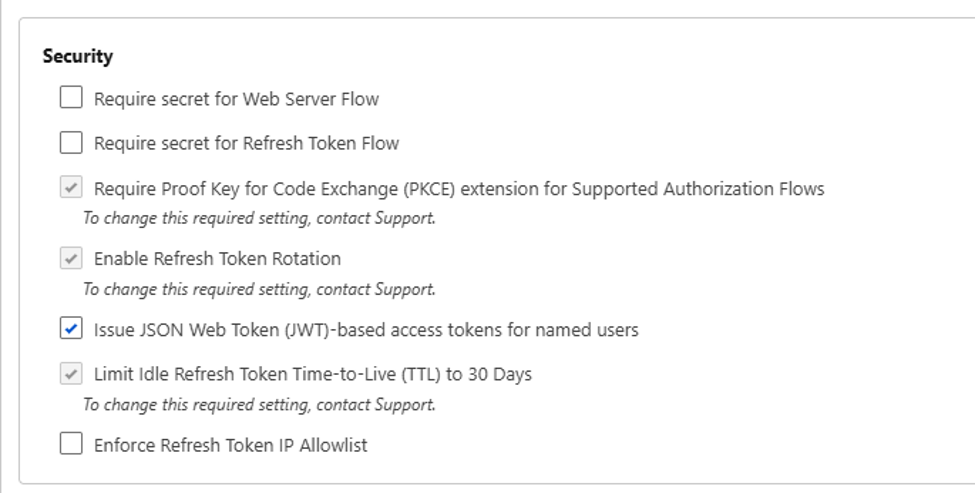
Apply Security Controls:
- Uncheck Require secret for Web Server Flow and Require secret for Refresh Token Flow if they are checked.
- Check Require Proof Key for Code Exchange (PKCE) extension.
- Check Issue JSON Web Token (JWT)-based access tokens for named users.
Step 3: Retrieve Your Consumer Credentials
1. Access OAuth Details:
- Open your newly created External Client App and navigate to the Settings tab.
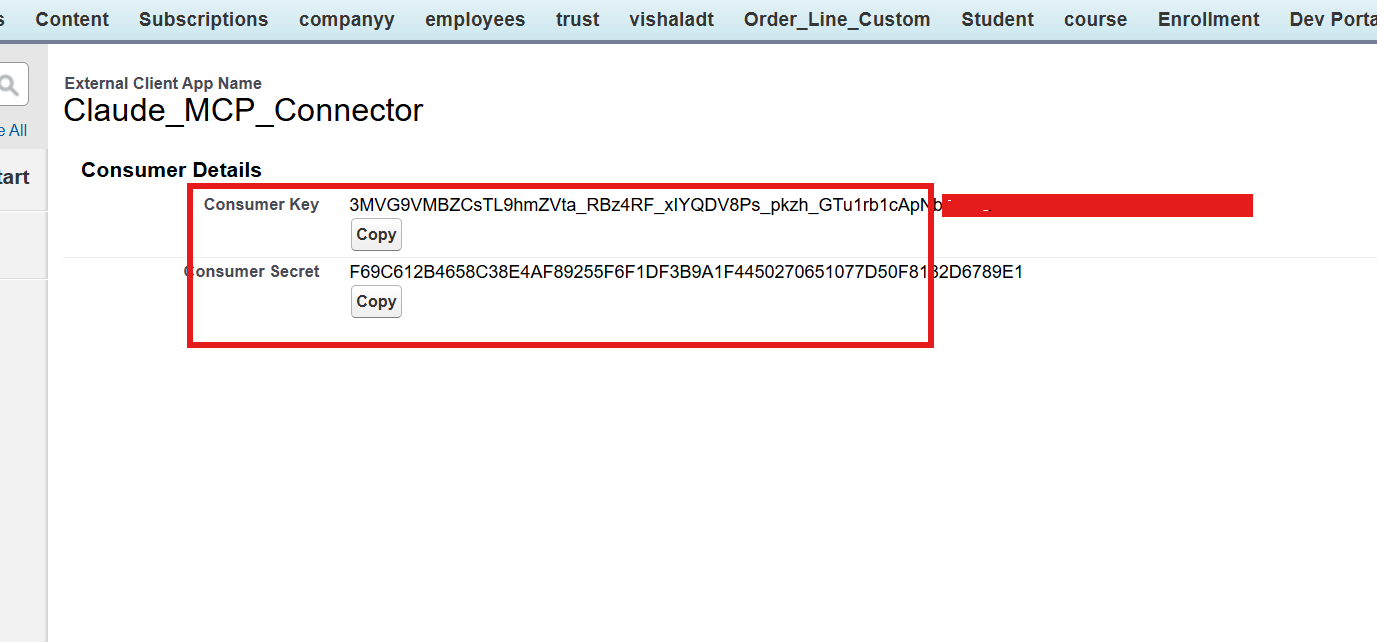
- Expand OAuth Settings and click Consumer Key and Secret.
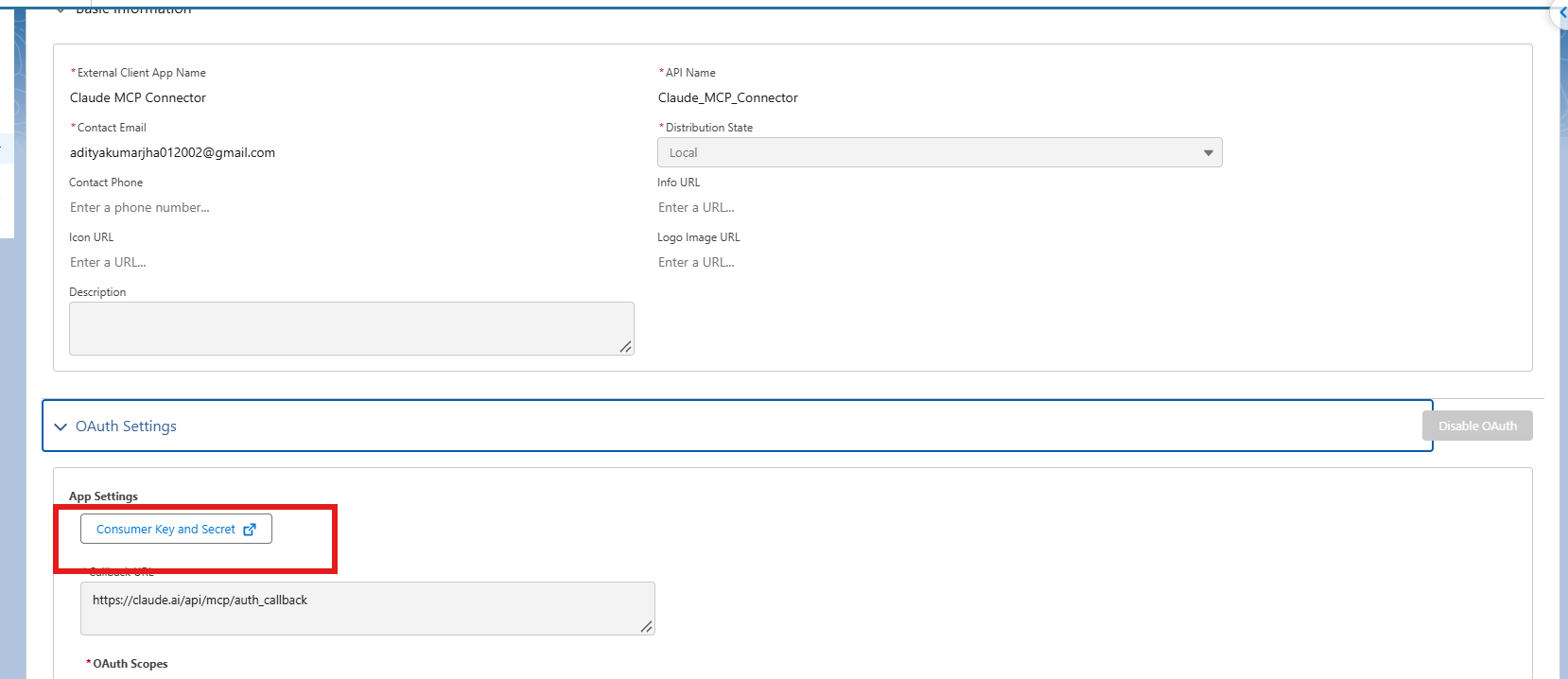
2. Save Credentials
- Copy the Consumer Key and Consumer Secret. Keep these secure, as they will act as your Client ID and Client Secret in Claude.
Step 4: Configure the Claude Custom Connector
This works in Claude on the web and in the Claude Desktop app, on Free, Pro, and Max plans. (Free accounts can add one custom connector. On Team or Enterprise, your organization Owner adds it first under Organization settings → Connectors, then you click Connect.)
1. Open Claude Setup:
- To set up the Claude Salesforce connector, open Claude’s Settings.

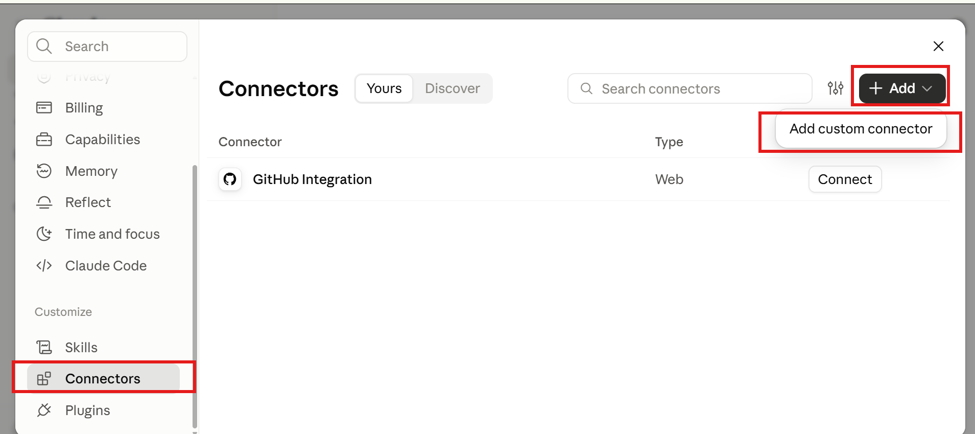
- Click Connectors, then the + icon, then Add custom connector.
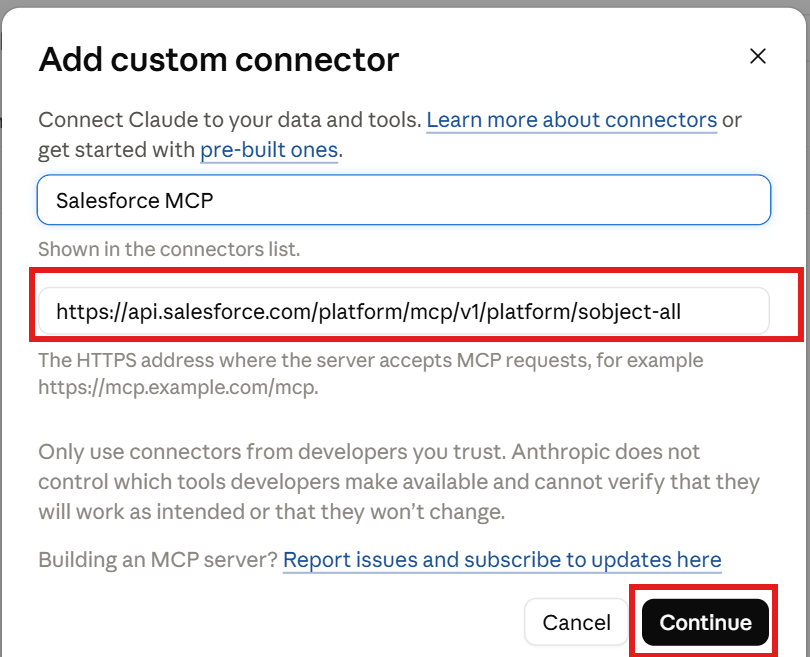
- Name: Enter a descriptive name like Salesforce MCP.
- Paste the Server URL you copied in Step 1 and click the Continue button.
2. Configure Authentication:
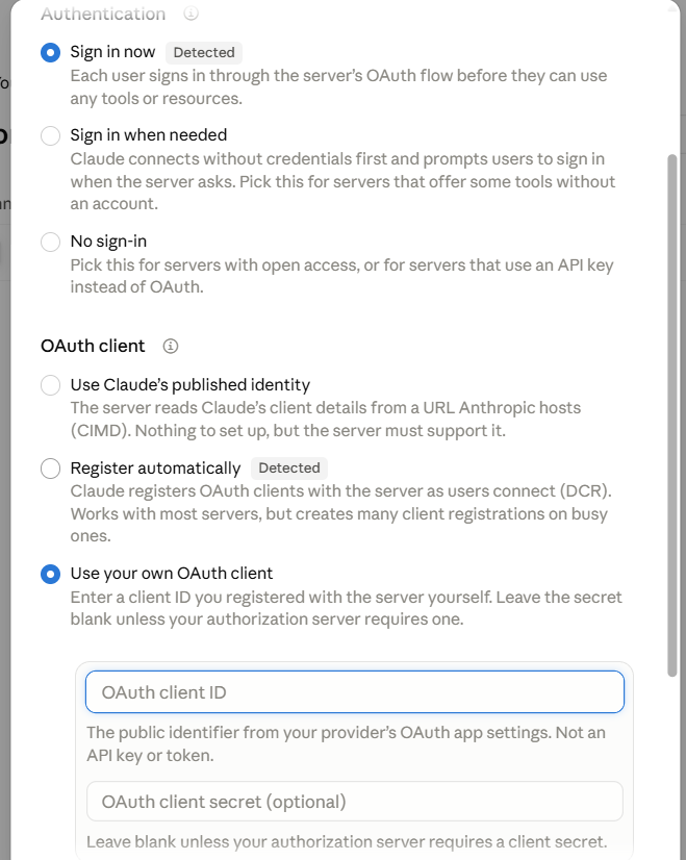
- In the Authentication section, select the Sign in now option.
- In the OAuth client section, choose Use your own OAuth client
- Paste your Salesforce Consumer Key into the OAuth client ID field
Step 5: Connect and Approve
- Click Connect next to your new connector.
- Claude redirects you to Salesforce. If you are already logged in to the org that contains your External Client App, the login step is skipped. Otherwise, log in.
- On the consent screen, review the permissions and click Allow.
- You’ll return to Claude with the connector showing as connected.
Step 6: Set Tool Permissions
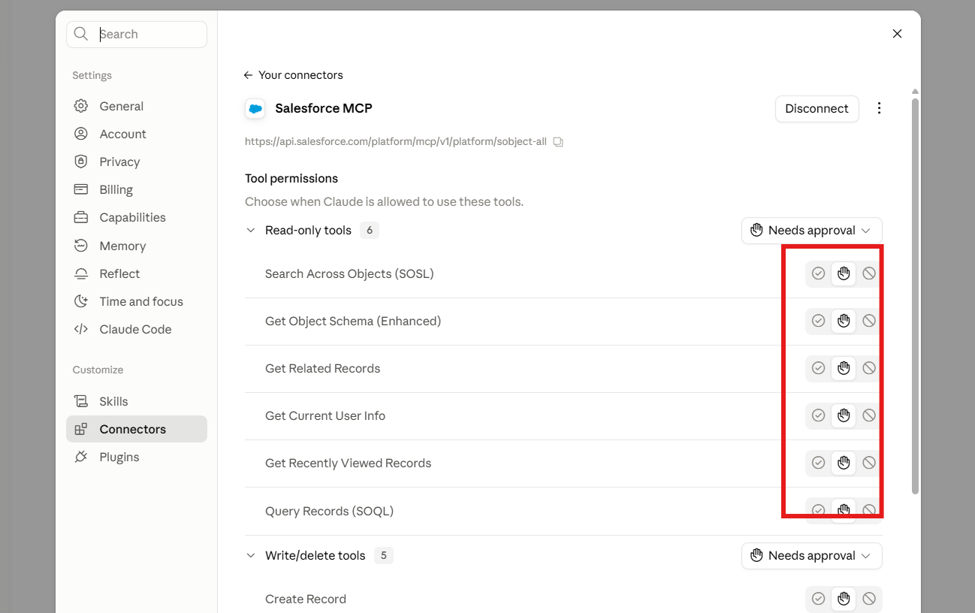
After a successful connection, click Configure on the connector to control each tool the server exposes. For each tool, you can choose:
- Always allow: Claude can run it without asking
- Needs approval: Claude asks before running it
- Block: the tool is disabled
- Best practice: during your pilot, keep write actions on Needs approval, and block anything you don’t need.
Step 7: Test the Integration in Claude
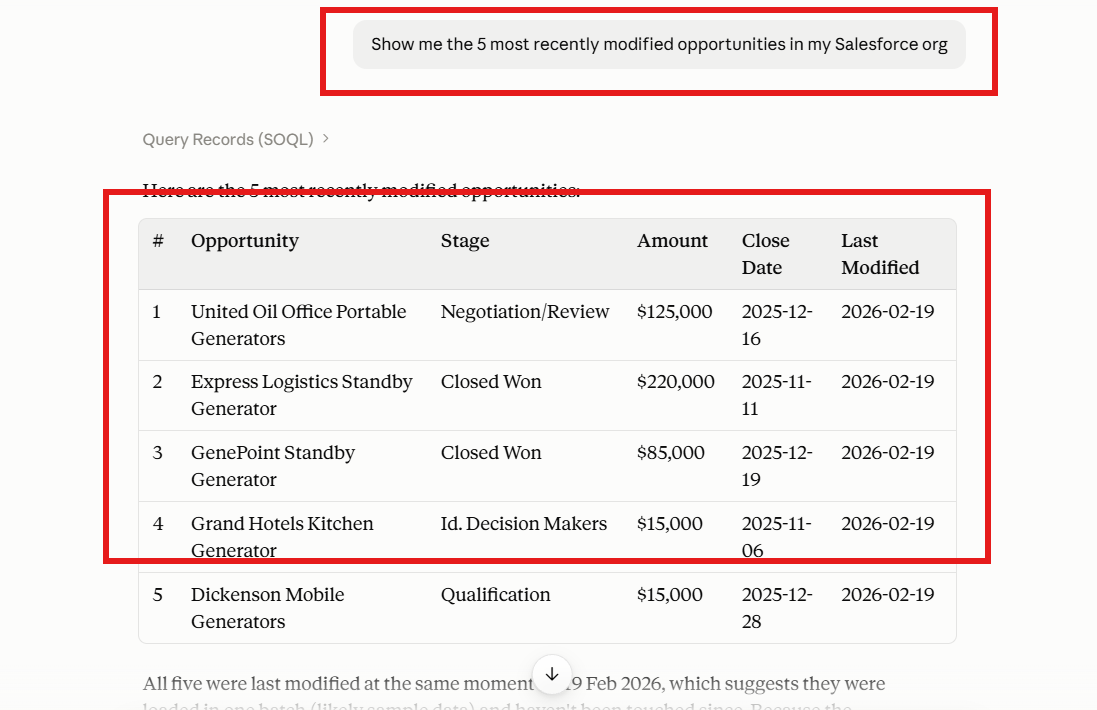
- Open a new chat in Claude and ask it a question about your CRM data.
- For example, type: “Show me the 5 most recently modified opportunities in my Salesforce org.”
Conclusion
Connecting Claude with Salesforce gives teams another way to interact with CRM information without relying entirely on manual searches and report building. Once the connection is configured, users can ask questions in everyday language and retrieve information through the tools exposed by the Hosted MCP Server.
However, a successful setup depends on more than connecting two platforms. OAuth configuration, user access, tool permissions, and your organization’s security requirements all play an important role. Additionally, the results Claude can retrieve or actions it can perform depend on the tools enabled and the permissions granted to the authenticated Salesforce user.
After completing the setup, test the connection with a few straightforward questions and review the results carefully. Keep unnecessary tools blocked, require approval for write actions, and expand access only when needed. This approach helps your team get practical value from Salesforce MCP while maintaining control over how Claude interacts with CRM data.
Watch Demo Video
Frequently Asked Questions
You need a Salesforce Developer, Sandbox, or Production org, Salesforce Administrator access, and a Claude account with custom connector capabilities.
OAuth 2.0 allows Claude to authenticate with Salesforce through an External Client App. The setup involves configuring OAuth scopes, callback URLs, security settings, and client credentials before authorizing the connection.
The Claude Salesforce connector lets users interact with supported Salesforce tools through Claude. Depending on the enabled tools and user permissions, they can retrieve records, run queries, and perform supported CRM actions.
Yes. Once connected, Claude can retrieve information through the available Salesforce tools. For example, users can ask it to show recently modified opportunities or find accounts matching specific criteria.
Open a new Claude chat and submit a simple query, such as “Show me the five most recently modified opportunities in my Salesforce org.” Verify that the results match the records and access permissions in Salesforce.

 India
India  USA
USA UK
UK Canada