
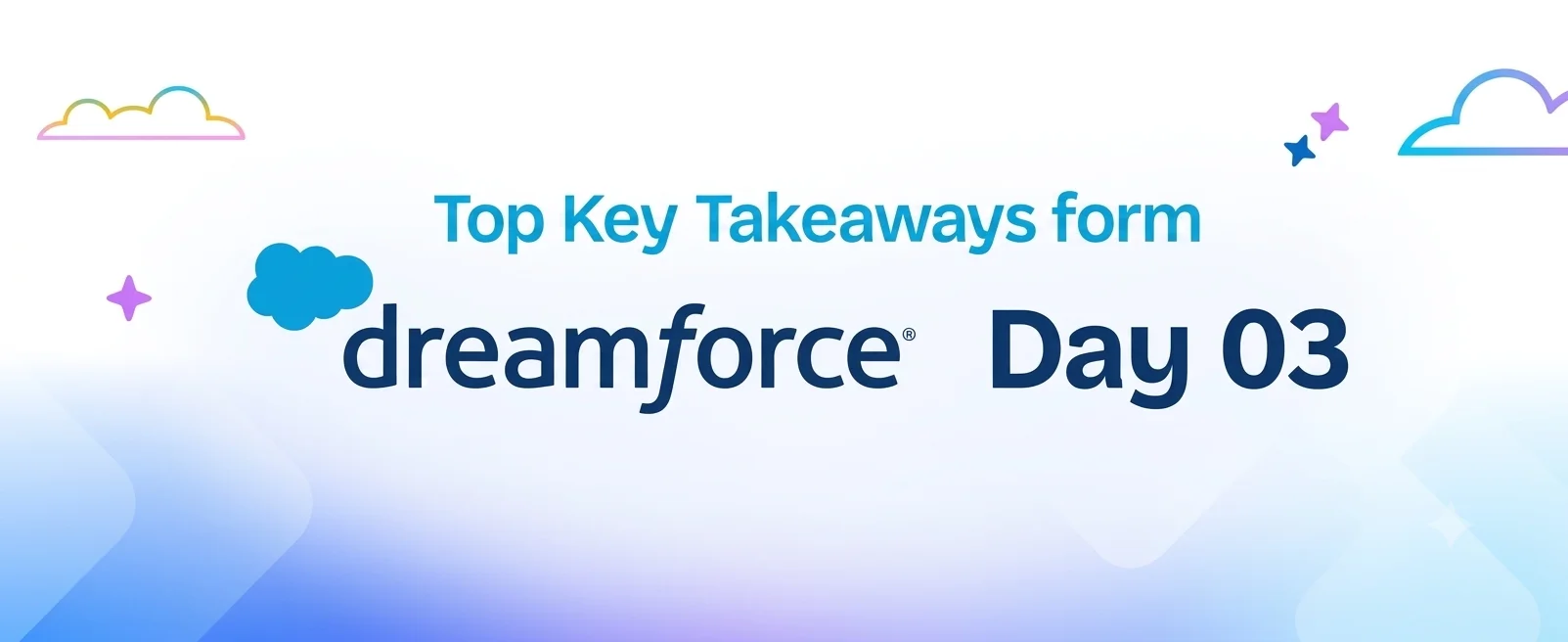
Dreamforce 2026 Day 3 brought a slightly different focus compared with the first two days. Instead of mainly introducing new AI layers, the sessions showed how these capabilities can become part of the everyday tools where teams are already working.
The biggest theme across Salesforce Dreamforce Day 3 was Slack. Salesforce positioned Slack as the “front door to the agentic enterprise,” bringing conversations, business data, AI agents, and actions closer together without requiring employees to constantly switch between different applications.
Along with Slackforce, the day also brought updates around Slack Code, Agent Fabric, Marketing Cloud, Palmata, Campaign Agent, Piper, and Hunter. Together, these announcements showed how AI is moving further into actual business workflows, where it can understand context and also help teams take action.
In this blog, we will explore the major Dreamforce day 3 key takeaways and the announcements that stood out from the final day of Dreamforce 2026.
Key Takeaways From Dreamforce 2026 Day 3
The Dreamforce day 3 key takeaways were largely connected by one idea: AI becomes much more useful when it is placed directly inside the flow of work. Instead of creating another destination for employees, Salesforce is bringing data, agents, and actions into familiar interfaces.
Here are the major key takeaways from the third day.
Campaign Agent Moves Toward More Autonomous Marketing
Salesforce also showed how agents can take a more active role in campaign management. Campaign Agent is designed to help marketers build and optimize campaigns while responding to performance signals instead of requiring every adjustment to be handled manually.
This connects with the wider AIforce direction seen throughout Dreamforce 2026. AI is not only being used to generate content or provide recommendations, but is increasingly being connected to the data and workflows required to actually move marketing activities forward.
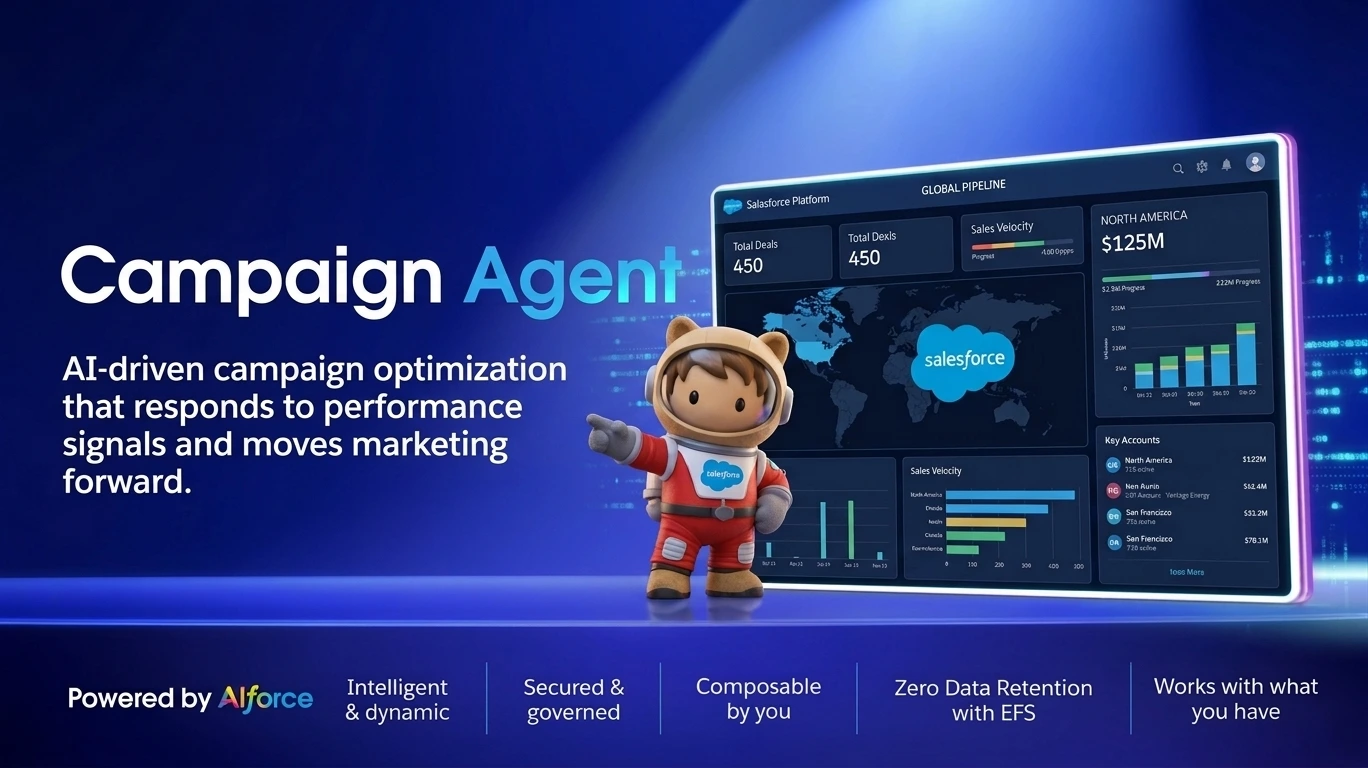
“It works end to end in your flow of work. It creates onbrand channel ready content in a new agentic editing experience and then assembles your campaign choosing the right timing message and channel for every customer. Then it keeps working after launch.”
– Natalie Matthysse – Product Marketing Director, Salesforce
Slack Becomes the Front Door to the Agentic Enterprise
One of the biggest messages from DF26 Day 3 was Salesforce’s changing view of Slack. It is no longer being presented only as a collaboration and messaging tool, but as an interface where employees, AI agents, applications, and business data can work together.
The idea is simple but quite significant. Instead of leaving a conversation to check Salesforce, employees can access CRM information, ask questions, trigger actions, and work with agents directly inside Slack. Salesforce describes this direction as bringing the CRM into the conversation where decisions are already happening.
Slack Code Brings AI Coding Into the Team Conversation
Another interesting part of the Salesforce Dreamforce updates was Slack Code, which takes AI-assisted development into a shared team environment. Instead of an individual working with a coding agent separately, teams can work with agents directly inside dedicated Slack channels.
Coding agents such as Claude Code, ChatGPT, Devin, GitHub Copilot, and Vercel agents can be brought into this workflow. The idea is to make development more collaborative, with business context, discussions, agent work, and engineering review happening in the same workspace.
“Slack code democratizes building… Coding is accessible to everyone now.”
– Katie Stigman – VP, Product Management, Slack, Salesforce
Helps Manage Growing Agent Ecosystems
As businesses start deploying more AI agents, another challenge appears, how do you keep all these agents connected, governed, and visible?
That is where Agent Fabric comes into the Dreamforce 26 conversation. The focus is not simply on creating another agent, but on helping enterprises discover, connect, govern, monitor, and manage agents across different systems. This becomes increasingly important as organizations move from experimenting with individual agents toward running larger agent ecosystems.
Marketing Cloud Brings AI Further Into Campaign Work
The third day also shifted the agentic conversation toward marketing. Salesforce showcased how AI agents can work across different parts of the marketing journey, from understanding brand visibility to optimizing campaigns and preparing sales teams for follow-up.
One of the notable announcements was Palmata, an AI-powered tool designed to help marketers understand how their brands appear in AI answer engines. It can provide insights around brand visibility, mentions, citations, competitors, and areas where content may need improvement.
“Palmada is our latest innovation that helps you understand, measure, and improve your answer engine optimization so that you can truly identify what is going to work and help improve how you show up in searches, giving your marketers clear recommendations and guidance to make every uh to make those in changes so that they can perform better.”
– Kimberly Gong, Marketer at Contentful
Palmata Looks at How Brands Appear in AI Answers
Palmata is particularly interesting because the way people discover information is changing. Instead of relying only on traditional search results, customers are increasingly getting answers directly from AI systems.
The tool helps marketers understand how their brand is represented in these AI-generated answers and where there may be opportunities to improve its presence. Thus, the focus is moving from simply ranking in search toward understanding how a brand is represented when AI answers a customer’s question.
Piper and Hunter Connect Marketing With Sales
Another part of the Dreamforce day 3 key takeaways was the continued role of Piper and Hunter in the customer journey. Piper can engage inbound leads and help move conversations toward meetings, while Hunter works with account signals and prepares information for sellers.
The bigger idea is that marketing and sales agents do not have to operate as isolated tools. They can work with the same business context and help move a prospect from initial interest toward a more informed sales conversation.
Agentforce Focuses More on Real Business Results
The Agentforce discussions on Day 3 also placed more emphasis on customer examples and measurable business value. Instead of focusing only on what an agent can technically do, the conversation moved toward how organizations are deploying agents in real workflows and understanding their return.
This was an important shift at Dreamforce 2026. After several announcements around agents, models, and infrastructure, the focus is increasingly on whether these systems can solve meaningful business problems and continue delivering value after deployment.
Wrapping Up: What Did Dreamforce 2026 Day 3 Really Show?
The Dreamforce day 3 key takeaways make one thing quite clear, Salesforce is moving toward an environment where people do not always need to open a traditional CRM screen to work with CRM data. Conversations, agents, applications, and business information can increasingly come together in the tools employees already use.
Salesforce Dreamforce Day 3 also showed that this shift is not limited to Slack. From Slack Code and Agent Fabric to Palmata, Campaign Agent, Piper, and Hunter, the focus is moving toward AI that can understand business context and participate in actual workflows instead of simply answering questions.
For businesses following AIforce, Agentforce, enterprise automation, or new AI-powered customer experiences, Dreamforce 2026 has provided plenty to think about. As a Salesforce partner, HIC Global Solutions will continue tracking these developments and sharing the updates that matter for businesses moving forward.
Stay tuned with #teamHIC and follow us on social media for quick updates on Dreamforce 2026, Salesforce announcements, AI developments, and what comes next for the agentic enterprise.
No Data Found.

 India
India  USA
USA UK
UK Canada